Home Educational Resources List

KS3 - YR 7 Number Strand Maths Progress Checker
Excel template to help guide and check the progress of learning through KS3 Maths
This strand focuses on developing numerical fluency and a deep understanding of number systems. Pupils will strengthen their confidence with integers, decimals, fractions, and percentages, building a solid foundation for problem-solving and future topics in mathematics. They will also be introduced to key number properties such as factors, multiples, and primes, and gain experience in estimation and standard form.
Use this progress checker to help guide your learning and use, alongside teaching resources to track, check and understand your child's progress.

KS3 Maths – Algebra Strand (Year 7)
Excel template to help guide and check the progress of learning through KS3 Maths
This strand introduces students to algebraic thinking and language. Pupils will begin to express mathematical relationships symbolically, laying the groundwork for more complex algebraic manipulation in later years. They will learn to form, simplify, and evaluate expressions, solve basic equations, and recognise linear sequences. This foundational understanding is crucial for success in problem-solving and future areas such as functions and graphs
Use this progress checker to help guide your learning and use, alongside teaching resources to track, check and understand your child's progress.
KS3 Maths Fact Sheet
A practical guide for home-educating families covering all key KS3 Maths topics. Includes topic breakdowns, curated resource links, and tips for independent learning and workload management.
This KS3 Maths Fact Sheet is tailored for parents and tutors supporting learners in Years 7 to 9 outside of mainstream school. Whether you're new to home education or looking to strengthen your child’s confidence in maths, this guide breaks down the KS3 curriculum into manageable topics and provides trusted, high-quality links to free resources.
You’ll find:
Clear topic areas (Number, Algebra, Geometry, Statistics, Ratio & Proportion)
Links to interactive websites such as BBC Bitesize, Oaks Academy and 162 Maths
Independent learning tools including Seneca
Advice on setting routines, managing stress, and avoiding overload
A final page with support options, contact information, and workshop invitations
Use this resource to build confidence, structure learning time, and help your child enjoy maths in a relaxed and home-based setting.

Calm Together Cards
A set of paired co-regulation prompt cards for parents and children, offering simple grounding actions, emotional check-ins, and playful strategies to bring calm and connection back into the moment.
Calm Together Cards are a set of printable, double-sided prompt cards designed to help parents and children regulate together through small, shared actions. Each card contains one side for the child and one for the parent, supporting co-regulation in real-life moments of overwhelm, worry, or dysregulation. The cards include grounding prompts such as noticing body sensations (“Notice what happens to your own body when you draw alongside your child…” p.1), sensory resets (“Lie down and gently rest on a soft blanket… breathe slowly” p.1), emotional honesty practices (“Modelling ‘I’m a bit cloudy today, but okay’ teaches emotional honesty…” p.1), and thought exploration (“When your child investigates their thoughts, try not to solve the case for them…” p.1).
Additional cards offer playful movement resets (“Let’s shake all the busyness out—arms, legs, face… breathe in, freeze…” p.2), gratitude prompts (“Add your three. It’s fine if they include coffee…” p.2), imaginative co-regulation exercises (“Notice your own calm colour. Imagine it surrounding both of you…” p.2), and empathy-building scripts (“A simple ‘That sounds tough’ opens more space than advice ever could” p.2).
The final set includes worry-release strategies (“Sometimes safety is knowing the worry has somewhere to sit…” p.3), invisible reset buttons for parents (p.3), and rest-focused affirmations that model self-compassion (“Modelling rest teaches children that recovery is part of coping…” p.3). These cards support parents in grounding themselves first, then reconnecting with their child—one calm moment at a time.

Reflect, Regulate, Reconnect: A Parent’s Guide to Co-Regulation in Real Life
A gentle, practical workbook helping parents understand their emotional patterns, recognise triggers, and build calmer, more connected moments with their children through everyday co-regulation.
Reflect, Regulate, Reconnect is a supportive, real-life guide designed to help parents strengthen their own emotional regulation so they can co-regulate more effectively with their children. The workbook opens with a reminder that co-regulation “doesn’t need perfection, it needs intention” (page 2), setting a compassionate tone for busy, stressed, real-life families. It leads parents through reflective exercises that identify emotional triggers (page 3), including a weekly Trigger Map for noticing patterns and the emotions behind them (page 4).
A dedicated section on understanding stress responses helps parents map energy, patience, sensory load, and support levels using simple 1–10 scales (page 5), making it easier to spot when they are running low before overwhelm hits. The workbook then introduces practical habits that support co-regulation—such as one-minute resets, naming feelings aloud, stepping out briefly, or building a reflective journal (page 6).
Parents are encouraged to intentionally create space for connection through small, doable rituals like co-breathing, five minutes of floor play, walking together, or sharing a snack (page 7). The final reflective section helps parents consolidate what they have learned, set intentions, and remind themselves daily: “I am learning. I am growing. I am doing enough” (page 8).
This resource supports parents in moving from reactivity to awareness, from overwhelm to connection—one gentle pause at a time.

The Good Deeds Elves Club
A reimagined “Elf on the Shelf” activity pack that swaps mischief for kindness, offering 24 simple, joyful good-deed prompts for children throughout December.
The Good Deeds Elf Club is a gentle alternative to the traditional Elf on the Shelf — one that replaces tricks and chaos with kindness, connection, and teachable moments. Inside, you’ll find the story of Pip, the founder of the Good Deeds Elves Club, and 24 thoughtful, child-friendly activities designed to help little ones practise empathy, gratitude, calm, sharing, and everyday acts of kindness. Each prompt (from Kindness Bingo to Calm Elf breathing activities) is simple to set up and encourages children to do good, notice good, and feel good — making December a time of connection rather than stress. A warm, magical way to bring kindness into the season.
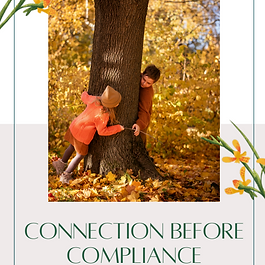
Connection Before Compliance: Simple Games to Ease the Battles
A playful, connection-first resource offering simple games that help reduce demand-avoidance, lower anxiety, and re-engage children through humour, autonomy, and co-regulation.
Connection Before Compliance is a practical, child-centred resource designed for families supporting children who experience demand-avoidance—where everyday requests can trigger overwhelm, anxiety, or shutdown. As explained on page 2, demand-avoidance is “rarely about defiance, but the need to feel safe and in control,” and traditional behaviour systems often increase pressure rather than resolve it. Instead, this guide provides simple, relational strategies that build connection, reduce stress, and gently support cooperation.
The resource includes six playful, low-pressure activities such as “You Be the Boss,” which gives children safe control over tasks (p.3); “The Lazy Robot,” using humour to reduce task-related tension (p.4); and “The Mystery Choice,” which shifts focus from compliance to curiosity (p.5). Additional games like the “Yes, But…” Story Game support cognitive flexibility and reduce rigid thinking (p.6). The guide also integrates Calm Together Cards for co-regulation and sensory grounding (p.7), plus a reflective “Pause and Reset” checklist to help adults regulate themselves before re-engaging their child (p.9).
This compassionate toolkit helps families turn moments of resistance into opportunities for connection, collaboration, and emotional safety.

Using AI in Home Education: A Quick Parent’s Guide
A simple, parent-friendly guide explaining how to use AI tools like ChatGPT to support home education, from planning lessons to creating personalised resources and reducing workload.
Using AI in Home Education: A Quick Parent’s Guide is a clear, accessible resource that helps parents understand how to safely and effectively use AI tools—such as ChatGPT—to support learning at home. It introduces what AI is in simple terms, describing it as “a super-powered notepad that talks back” (page 1), and explains key ideas such as prompts, front-loading information, and tailoring requests to a child’s learning needs (pages 1–2). The guide offers practical examples for curriculum planning, including weekly outlines, topic adaptations, and quiz creation (page 2). It also highlights how AI can support personalised learning through worksheets, explanations, and differentiated activities (page 3).
For parents managing busy schedules, the guide shows how AI can summarise articles, draft reports, or generate documentation to reduce workload while reminding readers to balance efficiency with meaningful connection (page 4). It closes with the “Golden Rules for Prompts,” helping parents give clear, age-appropriate instructions to get the best results (page 5).
Designed for real-life use, this guide supports parents in confidently using AI as a helpful tool—while keeping the heart of learning rooted in connection with their child.

Nature Activity Guide (EYFS & KS1)
An activity guide around the theme of Nature for 3-7 years
This guide offers a curated series of nature-themed activities designed to engage children aged 3–7 in meaningful, hands-on exploration of the natural world. Aligned with EYFS Learning Goals and Key Stage 1 National Curriculum objectives, the activities embed rich opportunities for developing communication, language, and literacy (CLL) through outdoor play, inquiry-based learning, and environmental interaction.
Children are encouraged to observe, describe, create, and question as they interact with plants, minibeasts, and natural materials, building vocabulary, expressive language, and early writing skills.

CLL Milestones Work-Through (Ages 3-7)
A comprehensive, practical guide for tracking and supporting communication, language, and literacy development in children aged 3–7.
The CLL Milestones Work-Through 3–7 provides structured developmental goals and clear progression statements across key domains:
Listening, Attention & Understanding
From following simple instructions to engaging in multi-step conversations.Speaking
Encourages expressive language, vocabulary growth, and meaningful participation in discussions.Phonics and Word Recognition
Focused progression from initial sound recognition to reading full sentences fluently.Reading Comprehension
Develops interest in stories, prediction skills, inference, and text engagement.Writing
From mark-making to sentence formation, including basic grammar and punctuation.
Rooted in early years best practices and child development theory, the guide emphasises the foundational role of communication and language in literacy success. It also reinforces practical strategies like real-life narration, open-ended questioning, and sensory phonics play.

Plan, Capture and Review 3-7 years
Confidently plan your child’s learning, document progress, and reflect on growth—without the overwhelm.
Designed with home educating families in mind, the Plan, Capture & Review resource provides a simple, flexible framework to help you stay organised, intentional, and encouraged in your home education journey.
🧩 What’s Included:
Planning Pages to set flexible goals and explore interests
Capture Templates to record learning as it happens—through play, conversation, outings, and more
Review Prompts to reflect on what’s working, celebrate wins, and gently adjust your approach
🌿 Perfect for families who want to:
Keep meaningful records without formal pressure
Recognise and value all types of learning (not just worksheets!)
Build confidence in their unique home education rhythm

🎭 Let’s Get Dramatic!
Ignite imagination, boost confidence, and build communication skills through drama-based learning.
Let’s Get Dramatic is a creative resource designed to help children explore storytelling, character building, and expressive language through play and performance. Whether you’re home educating or enriching your literacy curriculum, this pack encourages children to step into new roles, think creatively, and express themselves with confidence.
🎬 What’s Included:
Drama warm-ups and games to build confidence and focus
Role-play prompts and character creation activities
Mini-script ideas and storytelling frameworks
Reflection prompts to support emotional literacy and self-awareness
✨ Ideal for ages 5–11, this resource supports:
Verbal expression and vocabulary development
Creative thinking and problem-solving
Confidence and collaboration in a safe, playful environment

📖 10 Minutes a Day Literacy
Small steps, big progress—build literacy skills with just 10 minutes a day.
The 10 Minutes a Day Literacy resource is designed to make daily reading, writing, and language practice simple, achievable, and enjoyable. With short, structured activities, this resource helps children build confidence and consistency without overwhelm—ideal for busy families or learners who benefit from bite-sized tasks.
⏱️ What’s Inside:
Quick daily literacy tasks focused on spelling, grammar, vocabulary, and comprehension
A mix of creative and skills-based prompts to keep learning fresh and fun
Built-in reflection moments to encourage ownership and pride
Flexible format—use as a warm-up, brain break, or standalone learning activity
🧠 Suitable for ages 6–10, this resource supports:
Consistent progress through repetition and variety
Literacy confidence in reluctant or developing writers
Independent learning habits with gentle adult guidance
✨ Whether you’re home educating or looking for a focused supplement to schoolwork, 10 Minutes a Day Literacy helps you build strong literacy foundations—one day at a time.

📝 Literacy-Rich Environment Checklist
Create a space where reading, writing, and language naturally thrive.
The Literacy-Rich Environment Checklist is a practical tool designed to help parents, educators, and home educators build a setting that nurtures language and literacy development in everyday life. It highlights simple, effective ways to surround children with meaningful opportunities to explore words, sounds, and stories.
🏡 What’s Included:
A comprehensive checklist covering reading areas, print-rich spaces, and creative prompts
Tips for incorporating literacy into play, daily routines, and your learning environment
Flexible ideas suitable for home, classroom, or shared learning spaces
Reflection prompts to help you build or refresh your space with intention
📚 Ideal for early years through KS1, this resource supports:
Early reading and writing development
Language-rich interactions
Independent and playful learning

Vowel Phonemes – Parent Guide
A clear, parent-friendly guide to vowel sounds, explaining how they work and why they are so important for children learning to read.
Vowel phonemes are the heart of spoken language – the sounds that give words their “voice.” Understanding them helps children unlock reading, spelling, and confident speaking.
This Parent Guide to Vowel Phonemes explains:
What vowel phonemes are and why they matter.
The different types: monophthongs, diphthongs, and r-controlled vowels.
Why vowel sounds are shown in a V-shaped “valley” to map how the mouth shapes them.
The key characteristics of vowels and how small changes in sound can completely change a word’s meaning.
Practical explanations written in everyday language, so parents can easily support their child’s literacy journey at home.
With simple definitions, examples, and child-friendly visuals, this guide gives parents the tools to understand phonics more clearly and feel confident helping their children master one of the most important building blocks of reading.

🔢 Number Scavenger Hunt
An active, hands-on way to explore numbers in the real world!
Turn everyday surroundings into a fun and educational adventure with this Number Scavenger Hunt. Designed to support early maths and number recognition skills, this printable activity encourages children to observe, move, and engage with their environment in a meaningful way.
🕵️♀️ What’s Included:
A ready-to-go scavenger hunt sheet with number-focused prompts
Encourages recognition of numerals, counting, and patterns
Promotes movement, observation, and real-life maths connections
Great for indoor or outdoor play
👦👧 Perfect for home education, early years learning, or fun weekend challenges, this activity supports:
Number awareness
Language development (talking about what they find!)
Independence and confidence through discovery-based learning
🎯 Ideal for ages 4–7, but easily adaptable for older learners with added challenges!

🧮 Maths Work Through: A Gentle Guide for Ages 3–7
Support your child’s early maths journey with calm, confidence-building activities.
This Maths Work Through resource is designed to help young learners (ages 3–7) build strong foundations in maths—step by step, at their own pace. Ideal for home educators, parents, or early years practitioners, it focuses on understanding over memorisation, and curiosity over pressure.
📘 What’s Inside:
Progressive, child-friendly maths activities from early counting to number bonds
Visual prompts and hands-on exploration ideas
Encouragement for everyday maths connections—shapes, sizes, patterns, and problem-solving
Gentle guidance notes to support adults without overwhelming jargon
🌱 Whether your child is just starting out or needs a confidence boost, this resource helps them:
Develop number sense and maths vocabulary
Practice in meaningful, real-life contexts
Grow a positive mindset around learning maths
✏️ Flexible for ages 3–7
Adaptable for a wide range of abilities and learning styles—perfect for mixed-age learning and personalised education.

👩🍳 Let’s Get Cooking!
A fun, practical way to build life skills, confidence, and learning through the kitchen.
Let’s Get Cooking is a hands-on learning resource designed to help children explore cooking in a safe, engaging, and educational way. Whether you're a home educator or simply want to get your child more involved in the kitchen, this pack offers the perfect mix of fun and skill-building.
🍽️ What’s Included:
Child-friendly recipe templates
Step-by-step planning and reflection pages
Prompts to explore ingredients, cooking methods, and food safety
Space for children to draw, write, and evaluate their creations
Built-in opportunities for literacy, numeracy, and sensory learning
🌟 Suitable for ages 3–11, with support as needed, this resource encourages:
Independence and responsibility
Language and maths skills in real-life contexts
Creativity, problem-solving, and self-expression
📝 Bonus: Includes tips for adapting tasks for different ages and abilities, making it ideal for mixed-age home education settings.
Let’s get cooking—and learning—together!
Curious Minds
Inspire big questions, spark deeper thinking, and nurture a love of learning.
Curious Minds is a beautifully designed resource that encourages children to wonder, investigate, and reflect. Perfect for home educators, curious families, or classrooms looking to build critical thinking and discussion skills in a gentle, age-appropriate way.
💭 What’s Inside:
Open-ended questions and prompts to spark thoughtful conversations
Creative thinking challenges and “what if?” scenarios
Activities that build reasoning, observation, and communication skills
Opportunities for writing, drawing, or talking through ideas
Themes that connect with real life, science, imagination, and more
🌱 Ideal for ages 5-11, this resource supports:
Independent thinking and self-expression
Confidence in asking questions and exploring ideas
Language development and collaborative learning
Use it as a morning warm-up, a quiet reflection activity, or part of a wider topic—it’s flexible, enriching, and fun.

Feelings Explorer: A Walk Through Emotions for Ages 4–8
A fun, interactive guide helping children aged 4–8 understand, name, and manage big feelings through playful activities and calm strategies.
Feelings Explorer: A Walk Through Emotions for Ages 4–8 is an engaging resource designed to help young children discover and talk about their emotions in a safe and playful way. Packed with activities like acting out emotions, calming breathing exercises, and reflective questions, it shows children that all feelings are normal—and that actions can be chosen separately from emotions.
Children learn about happiness, sadness, anger, excitement, and more, exploring where feelings show up in their bodies and how emotions can change. Games like “Freeze and Choose” encourage kids to practice helpful responses even during strong emotions.
This guide supports emotional literacy, self-awareness, and healthier coping strategies, giving children tools they can carry for life.

Rooted & Resilient: A Child’s Guide to Growing Strong
A gentle, child-friendly introduction to resilience, helping children discover their inner strength through engaging tree analogies and practical tips.
Rooted & Resilient: A Child’s Guide to Growing Strong is a beautifully designed resource introducing children to the concept of resilience in an accessible and comforting way. Using the metaphor of a tree—with roots, branches, and leaves—it explains how resilience helps us stay strong and keep growing, even when life feels challenging.
Children explore what “roots” they have in their lives, like family, friends, hobbies, and trusted adults, and how these can help them face everyday challenges such as tests, arguments, mistakes, or learning new skills. The presentation encourages kids to identify personal sources of strength and discover practical strategies to grow their resilience, including asking for help, trying new things, practising skills, and being kind to themselves.
This resource fosters emotional awareness, self-confidence, and healthy coping skills in children aged 4–8.
Parent Workshop: Creating a Rhythm That Works For Your Family
A supportive video guide exploring how to build a balanced home education rhythm that nurtures learning, wellbeing, and curiosity.
In this insightful video, we explore how developing a consistent yet flexible rhythm can transform your home education experience. Rather than rigid schedules, rhythms provide children with a sense of safety, predictability, and space for creativity—helping them thrive emotionally and educationally.
We’ll look at how weekly or bi-weekly rhythms can support a broad and balanced curriculum, accommodate multiple ages, and align with your child’s social-emotional needs. Drawing on educational psychology and child-led learning principles, this session also introduces ways to observe your child’s natural pace, incorporate varied interests, and gently transition from deschooling into more structured or semi-structured routines over time.
If you're seeking guidance on how to develop a home education routine that truly fits your family, this is a warm and practical place to begin.
Looking for more tailored support? Get in touch via Nurtured Together for help building a rhythm that meets your child's needs and reflects your values.

Letter Formation Guide for Early Literacy
Help your child learn to form letters with confidence using this clear, developmentally appropriate letter formation guide, perfect for home educators and early learners.
This Letter Formation Guide is a gentle and effective tool to help children build confident handwriting habits from the start. Ideal for home-educating families, early years educators, and SEND support, it provides a clean, easy-to-follow visual reference for forming each letter of the alphabet.
Designed with simplicity in mind, the guide:
Reinforces correct starting points and directionality
Encourages consistent top-to-bottom and anti-clockwise movements
Aligns with how letters are introduced through systematic phonics approaches
Helps prevent the development of incorrect habits that are harder to undo later
This guide can be:
Used as a reference during mark-making and writing activities
Displayed in learning areas or laminated as a reusable mat
Paired with tracing sheets, whiteboards, or sensory writing tools (like sand trays or finger tracing)
What’s Inside:
A full A-Z lowercase letter formation chart
Visual emphasis on movement direction
Minimalist layout for distraction-free focus
Suitable for pre-writers, early writers, and older children needing handwriting intervention
Whether your child is just beginning to write or needs gentle support to build more accurate habits, this guide is an essential part of any early literacy toolkit.

Mark Making Practice for Letter Formation
Support your child’s early handwriting with these beautifully illustrated mark-making flashcards, designed to build essential muscle memory for correct letter formation.
Give your child the best start on their writing journey with this playful and purposeful Mark Making Flashcard Set. Created to support early literacy and handwriting skills, each card introduces a fundamental mark type that lays the groundwork for proper letter formation — including circles, spirals, zig-zags, curves, and more.
These flashcards help children:
Build fine motor strength and coordination
Practise directional movement (left-to-right, top-to-bottom)
Learn early handwriting habits through drawing and play
Develop confidence with pre-writing patterns that align with letter shapes
Whether used with sand trays, chalk, paints, or pencils, these cards invite creativity while subtly building the muscle memory needed for confident, fluid handwriting.
Also included is a visual guide for parents explaining the link between each mark and the letters it supports — making it easy to use this resource intentionally, without any pressure.
What’s Included:
13 illustrated mark-making flashcards
Direction prompts (e.g., “anti-clockwise”, “top to bottom”)
Parent support guide with explanations and tips
Perfect for ages 2–6 or as a motor skills support tool
These movements are the building blocks of writing, and with repeated, playful exposure, your child will be well on their way to developing the habits and confidence they need for formal handwriting later on.

Sounds Scavenger Hunt (Ages 4–7)
Turn everyday listening into a fun adventure! The Sounds Scavenger Hunt helps children aged 4–7 explore the world through their ears.
Turn everyday listening into a fun adventure! The Sounds Scavenger Hunt helps children aged 4–7 explore the world through their ears. Perfect for home or outdoor learning, this activity encourages kids to identify different sounds in their environment, boosting listening skills, language development, and curiosity. Includes a colourful checklist and prompts for sharing favourite sounds which develops listening skills in preparation for learning early reading and writing.

Phoneme Segmentation Game
A fun and interactive game to help children practise breaking words into individual sounds (phonemes) – a vital early literacy skill.
Phoneme segmentation is the ability to break down words into their smallest units of sound – a key building block for reading and spelling success. This engaging game makes practising segmentation fun and accessible for young learners.
The Phoneme Segmentation Game includes:
Clear instructions for parents and educators.
Word lists grouped into three, four, and five phoneme examples.
A simple scoring system to motivate children to “beat their score.”
Bright, child-friendly design to keep learning enjoyable.
By playing this game, children strengthen their phonemic awareness, improve their decoding skills, and build the foundation for confident reading and writing. Parents can use it at home for extra practice, while educators can integrate it into phonics lessons or small group activities.

A Parent’s Guide to Curriculum Variety in Home Education
A Parent’s Guide to Curriculum Variety in Home Education
Choosing a curriculum is one of the most important—and often most overwhelming—decisions for families beginning their home education journey. This in-depth guide offers a clear, supportive overview of various curriculum options available to UK home educators, including structured frameworks like the National Curriculum, EYFS, and Curriculum for Excellence, as well as alternative approaches such as Montessori, Steiner-Waldorf, and Charlotte Mason.
We also introduce modern, flexible models such as project-based learning, nature-based approaches, and eclectic methods, helping you understand the benefits and limitations of each. Whether you're seeking structure, creativity, freedom, or a blend of all three, this guide is here to help you reflect on what matters most and create a learning plan that works for your child.
Need support with choosing or tailoring your approach? Reach out via Nurtured Together for personalised guidance in planning, observing, and reviewing your child’s learning journey.

Self-Advocacy Cards
A ready‑to‑use self‑advocacy script template to help children who mask learn to recognise stress and ask for support calmly and confidently.
What this resource is: A practical template pack that teaches children simple, rehearseable scripts and nonverbal signals to request breaks, sensory supports, or step‑by‑step help. It’s designed for families, teachers, and therapists who want a low‑pressure way to reduce masking and prevent burnout.
Who it’s for:
Parents and carers supporting children who hide their distress to fit in.
Teachers and school staff needing quick, classroom‑friendly scripts.
Practitioners who want reproducible tools for teaching self‑advocacy.
What’s included:
Four short, age‑adaptable verbal scripts and one additional check‑in script.
Nonverbal alternatives (card system, discreet gesture, icon strip).
One‑line teacher/carer note templates and printable card wording.
Step‑by‑step guidance on teaching, practising, and embedding scripts into routines.
Troubleshooting tips for common barriers (staff forgetfulness, peer attention, low‑verbal children).
How to use it: Start with one short script, practise in calm moments, and make the script visible (card, lanyard, visual schedule). Agree on a predictable adult response so the child learns the script works. Adapt wording to the child’s age and communication style and pair the script with a simple re‑entry plan.
Expected outcomes:
Faster recognition of rising stress and earlier, less disruptive regulation.
Reduced need for sustained masking and lower social‑cognitive load.
Clearer communication between the child and adults improves trust and belonging.

Lunch Lab: My Healthy Lunch Adventure!
A fun, hands-on shopping list challenge for kids to create a healthy lunch while learning about food choices, budgeting, and healthy eating.
Lunch Lab: My Healthy Lunch Adventure! turns making a healthy lunch into an exciting mission for children. This interactive resource helps kids aged 4–8 choose ingredients from different food groups, write or draw their own shopping list, and hunt for items in the fridge, cupboard, or supermarket.
Kids pick proteins, veggies, fruits, carbohydrates, and drinks to craft a balanced meal, learning about healthy eating along the way. The activity encourages real-life skills like reading labels, comparing prices, and exploring new foods. Bonus challenges invite children to stay under a budget, try new ingredients, or get creative with what’s already at home.
This resource sparks curiosity about nutrition and empowers kids to make healthy choices for life.

CLL Milestones Work-Through (Ages 7–11)
A structured developmental guide for supporting children aged 7–11 in Communication, Language, and Literacy (CLL).
The CLL Milestones Work-Through 7–11 offers a robust, age-appropriate framework to assess and support children's literacy and communication skills. It includes clear developmental "Focus" and "Progression" milestones in:
Listening, Attention & Understanding
Skills range from attentive listening and respectful participation to inference and group collaboration.Speaking
Encourages clear, grammatically sound speech with expressive storytelling and audience awareness.Reading
Covers fluency, comprehension, inference, text structure, and genre comparison — from foundational to evaluative levels.Writing
Supports growth from paragraph writing and sentence variation to creative structure, cohesive devices, and grammar accuracy.
Key Principles
Talk Deepens Learning: Encourage discussion to consolidate ideas.
Vocabulary Matters: Teach rich language explicitly and frequently.
Reading Fuels Writing: Reading widely enhances structure, voice, and creativity.
Grammar in Context: Integrate grammar instruction within real writing tasks.
Audience Purpose: Make tasks meaningful through real audiences.
Listening is Literacy: Train critical listening through stories, podcasts, and interaction.
Editing as a Skill: Model feedback positively and collaboratively.
Learning About Critical Thinking Skills
A practical guide to help children and young people develop critical thinking and media literacy skills – essential tools for navigating today’s world.
Critical thinking is more important than ever. Children are growing up surrounded by information – from books and lessons to social media and online content – and learning how to question, analyse, and reflect is key to their success.
This resource introduces the concept of critical thinking in a simple, engaging way. It covers:
What critical thinking is and why it matters.
How to build media literacy to spot fact from opinion.
Six key skills of critical thinkers: seeking diverse perspectives, asking questions, engaging in conversations, self-reflection, educating yourself, and applying learning.
Activities that encourage learners to evaluate evidence, think deeply, and form balanced conclusions.
Parents and educators can use this guide to spark meaningful discussions and help children develop the confidence to make informed decisions, problem-solve effectively, and thrive in a fast-changing world.

Find Your Unique Voice
Help you child discover how to express their thoughts and ideas in their own unique style through writing and speaking.
“Find Your Unique Voice” guides your child through understanding and developing their personal voice in writing or speaking. Learn why their voice matters, how to use personal experiences, and ways to build confidence in self-expression. The resource includes practical tips, writing prompts, and encouragement to help you explore your authentic style, maintain consistency, and enjoy the creative process.

Word Pattern Vocabulary Builder
Unlock the power of word patterns to boost spelling, decoding, and vocabulary skills.
The Word Pattern Vocabulary Builder helps children recognise and use common spelling patterns and word families to expand their vocabulary and reading fluency. Through engaging, hands-on activities, learners begin to see how words are built—giving them tools to read and spell with greater confidence.
🧩 What’s Included:
Word-building and pattern-spotting activities
Focus on common prefixes, suffixes, and root words
Visual aids and scaffolded tasks for different levels of support
Opportunities for writing, sorting, and word investigation
✏️ Ideal for ages 7–11, this resource supports:
Vocabulary development through phonics and structure
Spelling strategies based on understanding, not memorisation
Literacy confidence for both emerging and reluctant readers

Context Clue Challenges
Boost vocabulary and reading confidence through fun, detective-style word work!
The Context Clue Challenges resource helps children become word detectives—using the clues around unfamiliar words to figure out their meaning. These activities are perfect for strengthening reading comprehension, building vocabulary, and developing critical thinking skills in a playful and accessible way.
📘 What’s Included:
Engaging challenge cards with mystery words and helpful context
Scaffolded support to encourage independence and problem-solving
Fun formats like multiple-choice clues, word swaps, and fill-the-gap puzzles
Opportunities for discussion, writing, and partner work
🧠 Ideal for ages 7–11, this resource supports:
Vocabulary growth through meaningful reading
Inference and reasoning skills
Confidence in tackling unfamiliar words during reading
Perfect for home educators, tutors, or classroom use—whether as a warm-up, literacy station, or enrichment activity.
🕵️ Let’s crack the clues and make new words feel familiar!

Plan, Capture and Review
Confidently plan your child’s learning, document progress, and reflect on growth—without the overwhelm.
Designed with home educating families in mind, the Plan, Capture & Review resource provides a simple, flexible framework to help you stay organised, intentional, and encouraged in your home education journey.
🧩 What’s Included:
Planning Pages to set flexible goals and explore interests
Capture Templates to record learning as it happens—through play, conversation, outings, and more
Review Prompts to reflect on what’s working, celebrate wins, and gently adjust your approach
🌿 Perfect for families who want to:
Keep meaningful records without formal pressure
Recognise and value all types of learning (not just worksheets!)
Build confidence in their unique home education rhythm

Writing Checklist for Early Writers
Support independent writing habits with this clear and child-friendly checklist poster, designed to help children self-monitor their work with confidence.
This Writing Checklist Poster is a simple yet powerful tool to help children become more independent, reflective writers. Designed with clarity and accessibility in mind, this resource supports home educators in establishing consistent writing habits from the outset.
The checklist covers the five essential self-check areas for young writers:
✅ Capital Letters – starting each sentence the right way
✅ Punctuation – remembering to end with full stops or other marks
✅ Finger Spaces – making sure words are clearly separated
✅ Does it Make Sense? – reading work aloud to check for clarity
✅ Spelling – reviewing common words and using a dictionary if needed
How to Use:
Print and display in writing areas or learning spaces
Laminate and use as a desk mat for writing sessions
Refer to during shared or independent writing time
Pair with writing prompts or journal tasks to build habits
This poster encourages children to take ownership of their work in a non-pressured, visual way, helping them feel more confident and competent in their writing process.

🧮 Maths Work Through: A Gentle Guide for Ages 7-11
Support your child’s developing maths journey with calm, confidence-building activities.
This Maths Work Through resource is designed to help young learners (ages 7–11) tocontinue to develop strong foundations in maths—step by step, at their own pace. Ideal for home educators, parents, or early years practitioners, it focuses on understanding over memorisation, and curiosity over pressure.
📘 What’s Inside:
Progressive, child-friendly maths activities across all areas of math
Visual prompts and hands-on exploration ideas
Encouragement for everyday maths connections
Gentle guidance notes to support adults without overwhelming jargon
🌱 Whether your child is just starting out or needs a confidence boost, this resource helps them:
Develop number sense and maths vocabulary
Practice in meaningful, real-life contexts
Grow a positive mindset around learning maths
✏️ Flexible for ages 7-11
Adaptable for a wide range of abilities and learning styles—perfect for mixed-age learning and personalised education.

Podcast Planner
🎙️ Podcast Planner for Kids & Young Creators
Spark creativity, build confidence, and develop communication skills—one episode at a time!
This fun and accessible Podcast Planner is perfect for children who are curious about creating their own podcasts. Whether they’re sharing book reviews, fun facts, interviews, or original stories, this planner helps guide them through the process step by step.
🧠 What’s Inside:
Clear prompts to plan podcast themes and episodes
Script starters to help structure each show
Interview planning pages
Episode checklists for intros, jokes, sign-offs & more
Space to reflect, improve, and grow their skills
Fun section for designing podcast cover art
📣 Great for home education, classroom use, or creative clubs—this planner supports communication, literacy, and confidence in young learners.
🎧 Bonus: Tips for recording safely and free tools to use!

This or That: Ethical Dilemmas
Spark lively discussion and critical thinking with This or That: Ethical Dilemmas!
Spark lively discussion and critical thinking with This or That: Ethical Dilemmas! Perfect for children aged 7+ this engaging activity presents students with thought-provoking moral scenarios and asks them to choose between two options. Participants make a choice and then defend their decision through discussion or written reflection.
Scenarios cover relatable ethical questions—from finding a wallet with money to deciding whom to save in a crisis. Great for developing debate skills, empathy, and ethical reasoning in learners aged 7 years and up.
Features:
✅ Interactive movement-based activity
✅ Encourages critical thinking and discussion
✅ Printable and easy to facilitate

Deregistration Letter Template – EHCP (Special School Attending)
A ready-to-use letter template for families wishing to home educate a child with an EHCP who is currently attending a special school.
This downloadable template helps parents formally request consent from the Local Authority to electively home educate a child who has an Education, Health and Care Plan (EHCP) and is enrolled in a special school.
In line with Section 38 of the Children and Families Act 2014 and the SEND Code of Practice, this letter includes all key points to communicate your intention clearly and lawfully. It also affirms your ongoing commitment to meeting your child’s needs at home under Section 7 of the Education Act 1996.
The letter can be customised with your child’s details, school name, and contact information, and includes space for both digital or postal submission.
A reassuring and compliant first step for families seeking a personalised, nurturing learning path for children with additional needs.

Progress Over Perfection: A Gentle Learning Record Template
A beautifully designed, parent-friendly template for tracking your child’s learning, growth, and wellbeing without formal testing.
The Progress Over Perfection template is a supportive tool for home-educating families to observe and document a child’s progress naturally and holistically.
Designed to be used every 3–4 months, this printable template helps you record key areas of learning (literacy, maths, science, creativity, wellbeing, etc.), along with real-life experiences, resources used, and emerging interests. It includes prompts for parent reflections and suggestions for what progress might look like beyond grades or tests.
This resource encourages gentle, narrative-based assessment and a focus on the whole child—their curiosity, emotional development, and confidence. It’s a great way to build your evidence portfolio, gain clarity, and celebrate learning at your own pace to support your conversations with the Local Authority.
Includes a built-in guide section to support you through each step.
This template works well with the knowledge gained through our Getting Started with Home Education Course.

Deregistration Letter Template – Mainstream School
A simple, ready-to-use letter template for families wishing to deregister a child from a mainstream school to begin home education.
This editable letter template is designed to support families in formally notifying their child’s mainstream school of their decision to home educate, in line with their rights under Section 7 of the Education Act 1996.
It includes clear, respectful wording to request the immediate removal of the child from the school roll and reminds schools of their duty to notify the Local Authority (LA). The letter also gives parents space to follow up if confirmation of deregistration is not received within a chosen timeframe.
Perfect for parents who want a confident, compliant starting point when transitioning into home education.

Parent Workshop – Connection Over Curriculum
June 2025's Parent Workshop on the Importance of Connection
"Connection Over Curriculum” is a supportive video for home-educating parents who want to prioritise relational learning and emotional wellbeing over rigid academic structures. Rooted in the philosophy that meaningful education flourishes in strong relationships, this workshop guides parents through balancing curriculum aims with responsive, child-led learning.
Parents explore how to build trust, observe interests, and align educational opportunities with their child’s emotional readiness, learning style, and pace.

Introduction to Supporting Neurodivergent Learners: Who is a Neurodivergent Learner: Module 1
An accessible introduction to neurodivergence that explores what it means to be a neurodivergent learner, moving beyond labels to understand needs, differences, and lived experience.
This opening module lays the foundation for the Supporting Neurodivergent Learners series by exploring what we mean when we talk about a neurodivergent learner.
Rather than focusing on diagnoses or categories alone, this module introduces neurodivergence as a natural part of human variation and looks at how differences in thinking, processing, regulation, and interaction can shape a child or young person’s experience of education.
You’ll explore:
Why understanding matters
Understanding different defintions
Common neurodivergent profiles
Language we use in relation to neurodivergence
Understanding the medical, social and neurodiversity models used by professionals
How we challenge assumptions
This module is designed for parents, carers, and educators, and provides a shared language that supports collaboration rather than blame. It sets the tone for the rest of the series by centring lived experience, reducing stigma, and encouraging curiosity over judgement.
The next modules take this understanding further, focusing on what it really means to support a specific neurodivergent learner. You’ll explore how to identify needs clearly, work alongside others with shared purpose, and use what you’ve learned to create support that lasts — supporting the child not just to cope, but to feel safe, understood, and able to participate.
No prior knowledge is needed. These modules are about building understanding, not expertise.